What Is Bicarbonate’s Function in the Anion Gap?
What Is the Anion Gap?
The anion gap is a computed value used to aid in interpret an electrolytes panel and detect an underlying acid-base disorder. It contrasts the major measured positive ions in blood, mainly sodium, with the major measured negative ions, especially chloride and bicarbonate. Because the body contains many other charged particles that are not directly listed on a routine serum chemistry report, the anion gap acts as a diagnostic clue for those unmeasured ions and unmeasured anions.
At a practical level, the anion gap helps clinicians see whether a low serum bicarbonate reflects true acid buildup or a different process affecting acid-base balance. That makes it an important part of a broader electrolyte panel and clinical interpretation. It is not a standalone diagnosis; it is a pattern that guides further evaluation.
The key idea is simple: the blood has to maintain acid-base balance within a narrow reference interval. When acids accumulate, bicarbonate often falls as it buffers those acids. The resulting change may or may not increase the anion gap, depending on which ions are present and whether there is a shift in chloride or other electrolytes.
The Role of Bicarbonate Matters in Acid-Base Regulation
Bicarbonate is one of the body’s primary buffers. Within the buffer system, it helps resist abrupt changes in blood pH by neutralizing excess acid. This buffering capacity is essential for normal physiology, and it clarifies why bicarbonate is so important in acid-base analysis.
When acid is added to the bloodstream, bicarbonate may be depleted during buffering. That can produce bicarbonate depletion, which is why a low bicarbonate value is often a major clue in metabolic acidosis. However, low bicarbonate is not a diagnosis by itself. It is a lab result that needs context from the rest of the chemistry panel and, often, an arterial blood gas.
Bicarbonate matters in two ways. To begin with, it is a natural buffer. Next, it is part of the anion gap calculation formula. Because it is subtracted from sodium together with chloride, changes in bicarbonate directly influence the resulting gap. That is why changes in bicarbonate can reveal whether the body is losing bicarbonate, retaining acid, or adjusting for another disorder.
In many situations, the anion gap reflects a balance between acid production and the body's response through the buffer system and metabolic compensation. A rising gap often suggests the accumulation of acids that leave behind acid retention in the form of unmeasured ions. A falling bicarbonate, therefore, is both a physiologic response and a piece of the calculation.
The method of the Anion Gap Is Calculated
An Anion Gap Calculator uses a simple formula to regularly checked electrolytes. The most common version is:
Anion gap = sodium − (chloride + serum bicarbonate)
Certain formulas also include potassium, though many routine interpretations do not. A potassium-inclusive formula may be written as sodium + potassium − (chloride + bicarbonate). In general practice, the potassium-free version is often used because the contribution of potassium is limited relative to sodium.
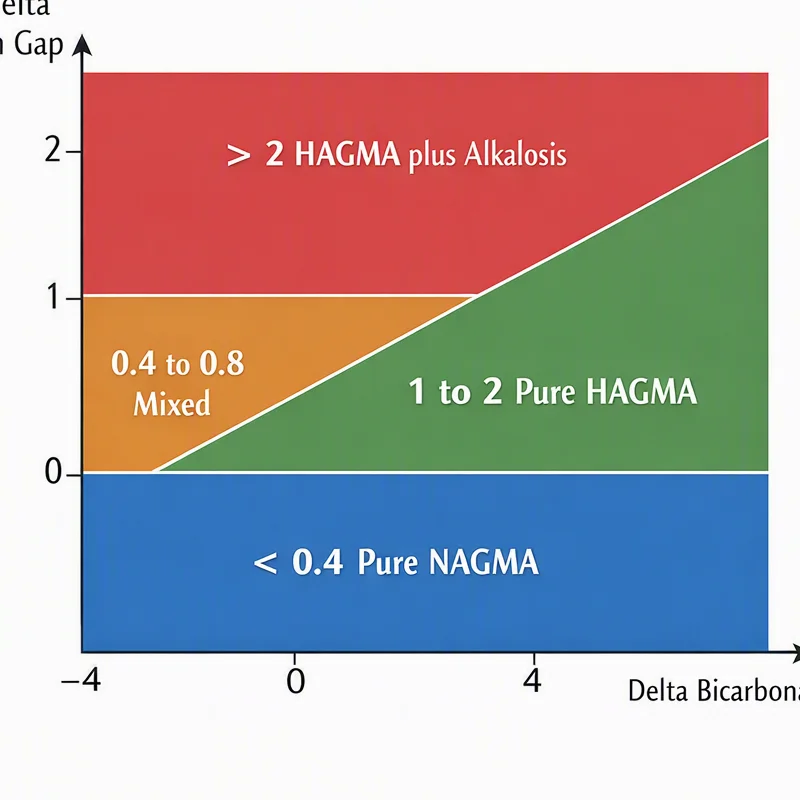
The important point is that serum bicarbonate is not just a supporting number. It is a direct part of the calculation. If bicarbonate falls and chloride does not rise enough to offset it, the anion gap will increase. If bicarbonate falls while chloride rises proportionally, the gap can remain normal.
This is why an Anion Gap Calculator is useful as a fast interpretation aid. It ties the basic metabolic panel to the likely acid-base pattern and helps identify whether there may be a mixed acid-base disorder. It also offers a convenient way to compare the lab result against the reference reference interval.
For example, if sodium is unchanged but bicarbonate drops because acid is increasing, the calculation will often show anion gap elevation. If bicarbonate drops because it is being depleted from the body and chloride rises to replace it, the gap may stay normal. That difference is essential to clinical interpretation.
How Decreased Bicarbonate Affects the Anion Gap
Low bicarbonate is typical in metabolic acidosis, but the anion gap tells you whether the problem is likely due to extra acids or bicarbonate loss. In high anion gap metabolic acidosis, bicarbonate falls because it is used to buffer added acid, and the acid’s accompanying anions are not measured in the routine panel.
Classic causes of high anion gap metabolic acidosis include lactic acidosis, ketoacidosis, and renal failure. In lactic acidosis, lactate acts like an unmeasured anion. In ketoacidosis, ketone bodies accumulate and consume bicarbonate. In renal failure, the kidneys are unable to eliminate acids effectively, so acid accumulates and the anion gap rises.
These conditions all have a common pattern: bicarbonate falls, and the “missing” negative charge appears as unmeasured anions. That is why bicarbonate is such a valuable diagnostic clue. It does not just tell you that acid-base balance is disturbed; it helps indicate whether the body is retaining acid or losing base.
In this setting, the low bicarbonate is part of the mechanism of the disorder, not just the result. As bicarbonate is consumed, the body’s compensatory response may include metabolic compensation through respiratory changes, which can be assessed with an arterial blood gas. The combined data support the final clinical interpretation.
Standard Anion Gap Metabolic Acidosis and Loss of Bicarbonate
Not all low bicarbonate reading means a high anion gap. In normal anion gap metabolic acidosis, bicarbonate is removed from the body, but chloride rises to offset the lost negative charge. This produces a pattern of low bicarbonate with a preserved gap, often accompanied by hyperchloremia.
Common causes include diarrhea and renal tubular acidosis. With diarrhea, anion gap normal by lab bicarbonate-rich intestinal fluid is lost, leading to direct bicarbonate loss. In renal tubular acidosis, the kidneys cannot handle acid-base transport properly, and bicarbonate is either not reclaimed or acid is not excreted effectively.
Chloride plays a major role here. When bicarbonate decreases but the total charge balance must remain stable, chloride often increases in a chloride shift. The result is a non-anion gap pattern, sometimes called non-anion gap acidosis. Although the anion gap stays normal, the acid-base disorder is still clinically important.
That is why bicarbonate should never be interpreted alone. A low bicarbonate with normal anion gap may point toward gastrointestinal loss, tubular dysfunction, or another cause of bicarbonate depletion. The lab pattern helps separate high-gap acid accumulation from normal-gap base loss.
Revised Anion Gap and Albumin
Albumin is the most important not directly measured anion in a lot of patients. When albumin is low, the measured anion gap can seem falsely normal or only mildly elevated even when serious acid accumulation is present. That is why hypoalbuminemia can hide a clinically significant disorder.
The corrected anion gap adjusts for low albumin so that hidden unmeasured anions are not overlooked. Because albumin contributes negative charge to the serum, low albumin reduces the baseline gap. Correcting for this effect increases the accuracy of interpretation and helps reveal a masked high-gap state.
This matters most when a patient has low bicarbonate but the uncorrected anion gap seems normal. Without correction, an underlying high anion gap process could be missed. In practice, albumin correction is a helpful step in the interpretation guide because it prevents underestimating acid burden.
Put simply, albumin influences the baseline. If albumin is low, the anion gap may need to be recalculated or corrected before deciding whether bicarbonate loss is due to a high-gap or normal-gap process. This is especially important when the clinical picture suggests lactic acidosis, ketoacidosis, or renal failure.
How to Interpret Results In Steps
A systematic interpretation starts with the basic metabolic panel and may be extended with an arterial blood gas. The goal is to relate the lab pattern to the underlying acid-base disorder. A organized approach enhances clinical interpretation and minimizes the risk of missing a mixed acid-base disorder.
Begin by reviewing bicarbonate, sodium, chloride, and potassium on the electrolyte panel. Look for low bicarbonate, abnormal chloride, and any major sodium shifts. These values form the basis of the acid-base picture.
Step 2: Calculate the anion gap using the standard formula or an Anion Gap Calculator. Contrast the result to the expected reference interval. A higher-than-expected number suggests unmeasured acids or ions.
Then check albumin. If albumin is low, make use of a corrected anion gap so that hypoalbuminemia does not hide the diagnosis.
Step 4: Decide whether the pattern fits high anion gap metabolic acidosis, normal anion gap metabolic acidosis, or another process. Think about whether bicarbonate has fallen because of acid accumulation, bicarbonate loss, or compensation for a respiratory disorder.
Finally, use the arterial blood gas to confirm pH and respiratory response. This is especially valuable when the result suggests a mixed disorder or when bicarbonate seems discordant with the clinical picture.
For example, a patient with low bicarbonate, an elevated gap, and increased lactate likely has lactic acidosis. A different patient with low bicarbonate, a normal gap, and high chloride may have diarrhea-related bicarbonate loss or renal tubular acidosis. The lab pattern is the diagnostic clue, but the final interpretation needs to fit the whole patient.
Common Questions About Bicarbonate and Anion Gap
Several questions develop when interpreting bicarbonate and the anion gap in combination. The primary concern is whether a low bicarbonate always means the gap will be elevated. The answer is no. The pattern depends on the underlying acid-base mechanism, the electrolyte shifts involved, and whether albumin is normal.
It also helps to remember that the anion gap is not a direct measurement of a specific acid. It is a calculated value that estimates the presence of unmeasured ions. That means a normal gap does not exclude acid-base disease, and a high gap does not identify the exact cause by itself.
Respiratory and metabolic processes can overlap. For example, respiratory alkalosis may lower bicarbonate over time as the kidneys compensate, while metabolic alkalosis usually raises bicarbonate rather than lowers it. These patterns matter because they change how the serum chemistry should be read in context.
An electrolyte imbalance can also influence the result without representing a primary acid problem. That is why bicarbonate must be interpreted with sodium, chloride, potassium, albumin, and the rest of the clinical picture.
Does a Low Bicarbonate Always Mean a High Anion Gap?
No. Low bicarbonate can occur with anion gap elevation, but it can also occur with a normal gap. In high anion gap states, bicarbonate is consumed by added acids, and the gap increases because unmeasured anions accumulate. In normal-gap states, bicarbonate is often lost and replaced by chloride, so the gap stays stable.
This distinction is essential when evaluating a possible mixed disorder. A low bicarbonate may reflect metabolic acidosis, respiratory compensation, or both. The anion gap helps sort out whether acid retention is present.
Can the Anion Gap Be Normal When Bicarbonate Is Low?
Yes. This is a classic pattern in hyperchloremic acidosis, also called non-anion gap acidosis. In this situation, bicarbonate falls but chloride rises, so the total calculated gap remains normal. Common examples include diarrhea and some forms of renal tubular acidosis.
Occasionally anion gap clinical significance chloride replacement throughout treatment can also keep the gap normal while bicarbonate remains low. This is why the same lab result can mean different results depending on the timing, treatment, and clinical context. The best interpretation always considers the full electrolyte pattern and, when needed, blood gas data.
FAQ
What is the role of bicarbonate in anion gap?
Bicarbonate is both a major buffer and a core part of the anion gap calculation. As part of the buffer system, it helps support acid-base balance and blood pH. In the formula, it is subtracted from sodium along with chloride, so a change in bicarbonate can increase or decrease the calculated gap depending on what is happening with the rest of the electrolytes.
Why does low bicarbonate happen in metabolic acidosis?
Low bicarbonate happens in metabolic acidosis because bicarbonate is used to handle excess acid. That use lowers serum bicarbonate and reduces buffering capacity. Depending on the cause, this may produce increased anion gap metabolic acidosis, or it may occur with a normal anion gap if bicarbonate is being lost and chloride rises to replace it.
Can bicarbonate be low without an elevated anion gap?
Absolutely. Low bicarbonate can occur in normal anion gap metabolic acidosis, such as from diarrhea or renal tubular acidosis. In these cases, chloride usually increases, which keeps the gap normal. Low bicarbonate can also appear during compensation for other acid-base disorders, so the lab pattern must be evaluated carefully.
How does albumin change the anion gap calculation?
Albumin is an significant unmeasured anion, so low albumin can make the measured anion gap look lower than it really is. This is why hypoalbuminemia may hide a real acid-base problem. A corrected anion gap adjusts for albumin and improves the detection of unmeasured anions in disorders such as lactic acidosis or ketoacidosis.
What conditions commonly cause a high anion gap?
Common causes of a high anion gap include lactic acidosis, ketoacidosis, and renal failure. These conditions lead to the accumulation of unmeasured anions and a fall in bicarbonate. The result is anion gap elevation, which is a important diagnostic clue in the evaluation of metabolic acidosis and other acid-base disorders.